Do the Genealogies of Jesus in Matthew and Luke Contradict One Another?

Open Matthew’s Gospel. The very first chapter traces Jesus’ genealogy through Solomon. Now open Luke’s Gospel. His genealogy goes through Nathan instead. Matthew lists 41 generations. Luke records 76. Matthew follows Joseph’s line. Luke might be following Mary’s. But these differences that trouble modern readers would’ve made perfect sense to ancient Jews, and they reveal something remarkable about how genealogies actually worked in the ancient world.
Welcome Back
Welcome back to Word for Word. I’m Austin Duncan, and today we’re tackling one of those questions that looks like a knockout blow to the Bible on the surface, but turns out to be something much more interesting once you dig into it. The question is simple: do the genealogies of Jesus in Matthew and Luke contradict one another?
If you’ve ever read both Gospels side by side, you’ve probably noticed that Matthew and Luke give very different family trees for Jesus. Different names. Different numbers. Different starting points. Different endpoints. And if you’ve ever had someone point that out as evidence that the Bible can’t be trusted, you know how unsettling that can feel in the moment. You’re standing there thinking, “Wait, they can’t both be right, can they?”
So today, we’re going to lay these two genealogies out on the table, look at them carefully, and ask: is this really a contradiction? Or is something else going on? Because I think what we’re going to find is that the differences between Matthew and Luke don’t weaken the Bible’s case. They actually strengthen it. And they reveal something beautiful about who Jesus is.
Before we jump in, let me give you a quick roadmap. We’re going to cover a lot of ground today. First, we’ll look at what each genealogy actually says, because you need to see the differences for yourself before we can talk about them. Second, we’ll take a crash course on how genealogies worked in the ancient world, because this is where the lightbulb really turns on. Third, we’ll look at what Matthew was doing and what Luke was doing, because they had very different goals. Fourth, we’ll walk through the main solutions that scholars have proposed for the specific differences. And fifth, we’ll talk about what all of this means for how you read your Bible and how you talk about it with others.
Now, this episode builds directly on what we covered last week in Episode 59, “Do the Gospel Accounts Contradict One Another?” If you haven’t watched that one yet, I’d encourage you to go back and check it out, because a lot of the principles we discussed there about how ancient biographies work apply here too. We also touched on some of these themes back in Episode 33, “Is the Bible Divine Rather Than Human in Origin?” and Episode 43, “Who Was Cain’s Wife?” where we dealt with similar questions about how ancient texts handle genealogies and family records. So if those episodes are new to you, they’ll give you some great context for what we’re about to unpack.
One more thing before we dive in. I want to set a tone for this conversation, because I know topics like this can feel threatening. If you’re a believer and you’ve never noticed these differences before, don’t panic. You’re not the first person to discover them, and they don’t mean your faith is built on sand. And if you’re a skeptic and you came to this video because someone told you the genealogies prove the Bible is unreliable, I’m glad you’re here. I’d just ask that you stick around long enough to hear the whole case before you render a verdict.
Fair enough? Good.
Let’s start with the texts themselves.
Two Genealogies Side by Side
Matthew’s Genealogy
Before we try to explain anything, we need to see exactly what Matthew and Luke actually say. Because if you’ve never laid these two lists next to each other, the differences are striking. And I want you to feel the weight of the question before I offer any answers.
Matthew’s genealogy is found in Matthew 1:1 through 17. It’s the very first thing in his Gospel. Before any narrative, before any miracle, before any sermon, Matthew opens with a list of names. And the opening line reads:
“The book of the genealogy of Jesus Christ, the son of David, the son of Abraham.”
Right there, before we’ve even gotten to the second verse, Matthew is making a statement. He’s telling his readers that Jesus is the heir of David’s throne and the fulfillment of God’s promise to Abraham. That’s not just an introduction. That’s a thesis statement. That’s Matthew planting his flag in the ground and saying, “Everything that follows proves this man is who Israel has been waiting for.”
Matthew’s list then moves forward in time. He starts with Abraham, works through Isaac, Jacob, Judah, and eventually arrives at King David. From David, he traces through Solomon, the great king, and then down through the royal line of Judah’s monarchs, past the Babylonian exile, and finally lands on Joseph, whom he carefully describes this way:
“and Jacob the father of Joseph the husband of Mary, of whom Jesus was born, who is called Christ.”
Notice how precise Matthew is with that wording. He doesn’t say Joseph fathered Jesus. He says Joseph was the husband of Mary, and from Mary, Jesus was born. That’s a deliberate choice. Matthew knows about the virgin birth, and he’s threading the needle carefully, establishing Jesus’ legal right through Joseph while preserving the miracle of His birth through Mary. One sentence. Two truths.
Matthew’s list contains about 41 distinct names, though he counts one name twice to make his pattern work. And that pattern matters. He organizes the whole genealogy into three sets of 14 generations. Fourteen from Abraham to David. Fourteen from David to the Babylonian exile. Fourteen from the exile to Christ. He even spells it out explicitly in verse 17, just in case you missed it. Matthew wants you to see the structure. It matters to him.
Luke’s Genealogy
Now flip over to Luke. His genealogy appears in chapter 3, verses 23 through 38, and it’s structured very differently from Matthew’s. Where Matthew starts at Abraham and moves forward in time, Luke starts with Jesus and works backward. Way backward. Luke doesn’t stop at Abraham. He doesn’t stop at Noah. He keeps going past Seth, all the way back to Adam. And then he writes those stunning final words:
“the son of Enos, the son of Seth, the son of Adam, the son of God.”
Luke’s list is much longer. About 76 names. He doesn’t break it into neat sections or symbolic groupings. He doesn’t highlight the exile or mention kings by title. It’s a long, steady, unbroken climb from Jesus all the way back to the beginning of the human race, and then to God Himself.
The Main Differences
Now, here are the differences that jump off the page once you see them together.
The direction is different. Matthew goes forward from Abraham to Jesus. Luke goes backward from Jesus to Adam.
The scope is different. Matthew starts at Abraham, emphasizing Jesus’ Jewish identity. Luke goes all the way to Adam, emphasizing Jesus’ connection to all humanity. Matthew is thinking about Israel. Luke is thinking about the world.
The royal line is different. This is the big one. Both Matthew and Luke trace Jesus’ ancestry through David. But after David, they split. Matthew follows the line through Solomon, David’s famous royal son who built the temple and sat on the throne. Luke follows through Nathan, another of David’s sons who never sat on the throne, never built anything famous, and barely gets mentioned in the Old Testament. That’s a completely different branch of the family tree.
The length is different. Matthew has about 41 names. Luke has 76. That’s nearly double.
And here’s the one that really gets people. Joseph’s father is different. In Matthew 1:16, Joseph’s father is Jacob. In Luke 3:23, Joseph’s father is Heli. Those are two different names for the same man’s dad. And for a lot of modern readers, that’s where the alarm bells start going off. “Okay, you can explain away different lengths and different starting points, but you can’t have two different names for the same father. That’s a contradiction.”
I get it. I understand why it looks that way. And we’re going to address it directly.
But first, we need to put on a different set of lenses. Because everything I just described, the different directions, the different lengths, the different branches, even the different fathers for Joseph, all of it makes perfect sense within the world these texts were written in.
The problem isn’t with the genealogies. The problem is with our assumptions about how genealogies are supposed to work. We’re bringing 21st century expectations to first century documents, and then acting surprised when they don’t match. That’s like being confused that a Renaissance painting doesn’t look like a photograph. Different genre. Different rules. Different tools. Same truth. Different medium.
Ancient Genealogies, A Crash Course
This is where things get really interesting, because most of the confusion around Matthew and Luke’s genealogies comes from one simple mistake. We’re reading ancient documents with modern expectations. We’re assuming that a first century Jewish genealogy is supposed to work like a 21st century ancestry.com profile. We expect every name, every generation, every biological connection to be listed in strict chronological order. And that’s just not what ancient genealogies were designed to do.
I can’t stress this enough. Ancient genealogies were not the same thing as modern family trees. They weren’t designed to list every single biological ancestor in strict order from parent to child. They were designed to make a point. They were theological tools, legal documents, and literary compositions all wrapped together. And once you understand that, the differences between Matthew and Luke start to look a lot less like errors and a lot more like choices.
Let me walk you through six key principles that governed how genealogies worked in the ancient world. Every single one matters for our question today.
Principle One: Genealogies Served Purposes Beyond Biology
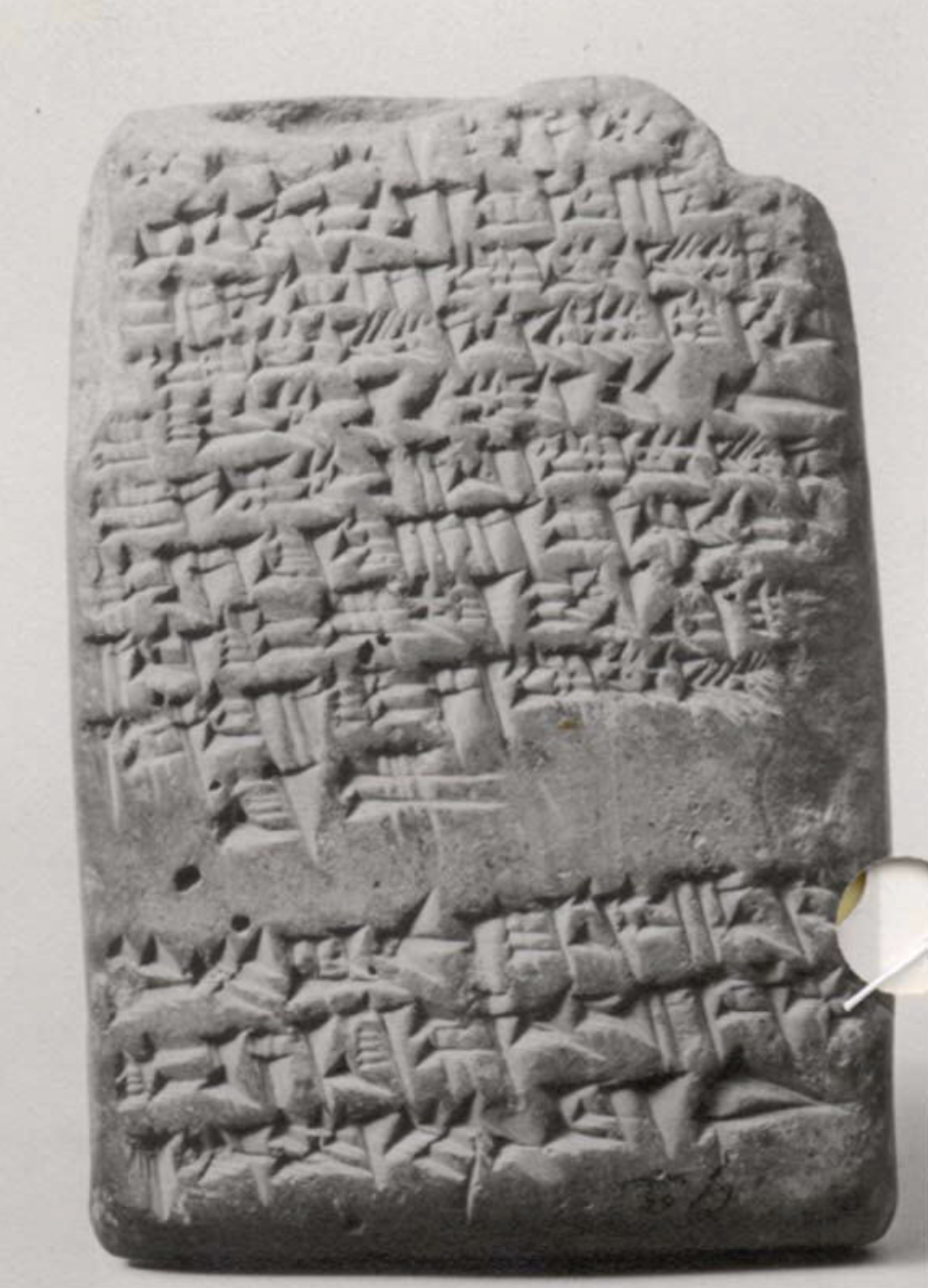
An ancient Babylonian clay tablet documenting a legal adoption, around 546 BC. Records like this show that ‘son of’ in ancient genealogies could reflect legal relationships, not just biological ones.
In the ancient Near East, a genealogy wasn’t just a record of who your parents were. It was a way of establishing your rights, your identity, your place in society. It could assert your royal pedigree, your priestly credentials, your tribal membership, your claim to land, or your connection to a covenant promise. Genealogies were legal instruments. They told the world where you belonged and what you were entitled to.
This matters enormously, because it means a genealogy could include people who weren’t biologically related to you. If you were adopted into a family, you appeared in that family’s genealogy. If a levirate marriage occurred, which we’ll talk about in a moment, the resulting child could show up in two different genealogies depending on whether you were tracking the legal line or the biological one.
We actually have physical evidence of this from the ancient world. In the Metropolitan Museum of Art in New York, there’s a Babylonian clay tablet from around 546 BC. It comes from the Egibi family archive, and it documents a legal adoption. It’s a formal contract that transfers a child into a new family line. Once that adoption was recorded, the child was legally counted as part of the adopter’s genealogy, even though there was no biological connection at all. That child could be called “son of” the adopting father in every legal record going forward, and nobody would bat an eye.
That tablet is a window into how the ancient world thought about family lines. A “son” wasn’t always a biological son. A “father” wasn’t always a biological father. The terms were flexible because the purposes were flexible. When we forget this and insist that “son of” must mean direct biological offspring, we’re importing our assumptions into a world that didn’t share them.
Principle Two: Skipping Generations Was Completely Normal
This one catches modern readers off guard, but it’s one of the best documented features of ancient genealogies. Authors regularly skipped names. They weren’t trying to be exhaustive. They were trying to be selective. The writer would choose which ancestors to include based on which ones served the point he was making.
Matthew does this openly, and it’s easy to verify. In his genealogy, he jumps from Joram to Uzziah in Matthew 1:8. But if you go check 1 Chronicles 3, which is the Old Testament record of the royal line, you’ll find that Matthew left out three kings in between: Ahaziah, Joash, and Amaziah. He just skipped right over them. Those men really existed. They really reigned. Matthew knew about them. He had access to the same Old Testament we do. He left them out on purpose to achieve his three sets of 14 generations.
And this wasn’t unusual. This kind of telescoping was a standard feature of ancient genealogical writing. When Matthew says Joram fathered Uzziah, the Jewish understanding of that language could mean “was the ancestor of.” It didn’t require a direct father to son connection.
We see the same thing elsewhere in Scripture. Ruth 4:18 through 22 gives a genealogy from Perez to David that scholars have long recognized as selective rather than exhaustive. Genesis 5 and 11 contain genealogies that many scholars understand as compressed rather than comprehensive. Ezra and Nehemiah contain selective lists. This is simply how ancient genealogies worked.
This is important to understand. In the ancient world, leaving names out of a genealogy wasn’t deceptive. It was editorial. It was the genealogist saying, “I’m going to include the ancestors that matter for my purpose and leave out the ones that don’t.” It’s the same thing a modern biographer does when they skip ten uneventful years in a person’s life to focus on the moments that shaped them. Nobody calls that lying. They call it good writing.
The fourth century church father Hilary of Poitiers noticed something interesting about the three kings Matthew skipped. All three of them, Ahaziah, Joash, and Amaziah, were descended from the house of Ahab through Queen Athaliah, who was an infamous pagan queen of Judah. God had pronounced judgment on Ahab’s line, and these kings carried that tainted lineage. So Hilary suggested that by omitting them, Matthew was making a theological statement. Whether or not you find that specific explanation persuasive, the larger point stands. Matthew was curating his list. He was making choices about what to include and what to leave out. He wasn’t running a census. He was building an argument.
Principle Three: Numbers Carried Symbolic Weight
Matthew’s pattern of three sets of 14 generations isn’t just a way of organizing the list. It’s a theological statement.
Most scholars believe the number 14 is a reference to David’s name. In Hebrew, each letter of the alphabet has a numerical value. This practice is called gematria, and it was widely used in Jewish literature. The letters in “David” add up to 14. So by arranging his genealogy in groups of 14, Matthew is essentially encoding David’s name into the very structure of the list. Every set of 14 whispers, “David. David. David.”
That’s not a math error. That’s literary craftsmanship. Matthew mentions David by name repeatedly in just 17 verses. He summarizes the three sections explicitly in verse 17. He’s making absolutely sure nobody misses the point: this Jesus is the Son of David. He’s the one the prophets promised. He’s the rightful King.
Luke’s list of 76 names may carry its own symbolic weight, though scholars debate exactly what it signifies. Some see it as a meaningful numerical structure. Others simply note that by going all the way back to Adam, Luke is making a universal claim rather than a numerical one. But the principle is the same. These authors weren’t slaves to arithmetic. They were careful communicators. They used numbers to say something, not just to count something.
A genealogy that hits a symbolic number isn’t less accurate. It’s more intentional.
Principle Four: “Son Of” Didn’t Always Mean “Biological Son Of”
I already touched on this, but it deserves its own moment because it’s critical for understanding the genealogies. In ancient Hebrew and Aramaic, the phrase “son of” had a much wider range of meaning than it does in modern English. It could mean biological son, yes. But it could also mean grandson, great grandson, distant descendant, legal heir, successor, or even member of a certain group.
The Bible uses this kind of language all the time. Paul says in Galatians 3:7:
“Know then that it is those of faith who are the sons of Abraham.”
Nobody reads that and thinks Paul is claiming a biological connection to Abraham. He’s talking about covenant relationship, belonging, identity.
So when Luke says Joseph was the son of Heli and Matthew says Joseph was the son of Jacob, both statements can be true in different senses. One could be describing a biological relationship. The other could be describing a legal one through adoption or marriage. In the ancient world, that kind of dual attribution was perfectly normal. It’s only a problem if you insist that “son of” can only mean one thing. And in the language these texts were written in, it simply didn’t.
Principle Five: Levirate Marriage Created Dual Lineages
This is one of the most important pieces of background for understanding the genealogies, and it comes straight from Old Testament law. Deuteronomy 25:5-10 describes what’s called levirate marriage. The word comes from the Latin word for brother in law.
The law worked like this: if a man died without producing a son, his brother was required to marry the widow. The first son born from that union was legally considered the dead man’s heir, not the living brother’s. The child carried on the dead man’s name, inherited his property, and continued his family line.
Now think about what that means for genealogies. That child had two fathers. He had a biological father, the brother who actually fathered him, and a legal father, the deceased brother whose name and inheritance he carried. If you wrote one genealogy tracing legal descent, you’d list the dead man as the father. If you wrote another tracing biological descent, you’d list the living brother. Both records would be accurate. Neither would be wrong. They’d just be tracking different relationships.
We see this principle illustrated in the book of Ruth. Boaz marries Ruth, who was the widow of Mahlon. Their son Obed is biologically Boaz’s child. But legally, Obed carries on the line of the dead husband. So depending on which genealogy you’re writing, Obed could be listed in relation to either line. The point is that Jewish law made room for this kind of dual lineage.
If you have levirate marriage in the background of Jesus’ ancestry, and there’s every reason to think you might, then two different genealogies for the same person aren’t just possible. They’re expected.
Principle Six: Adoption Carried Full Legal Weight
We already talked about the Egibi tablet, but Scripture itself also gives us adoption examples. Mordecai adopted Esther, who was actually his cousin. After the adoption, she was called his daughter. That wasn’t a mistake in the text. That was how adoption worked. The adopted child took the legal identity of the new family and could appear in their genealogy as a full member.
In Jewish thought, an adopted son could carry the family name, inherit property, and continue the family line. That means a person could legitimately appear as the son of one man in one record and the son of another man in a different record, depending on whether the record was tracking biology or legal standing.
Paul actually uses this exact concept in Romans 8 when he says believers have received the Spirit of adoption and become heirs with Christ:
“For you did not receive the spirit of slavery to fall back into fear, but you have received the Spirit of adoption as sons, by whom we cry, “Abba! Father!” The Spirit himself bears witness with our spirit that we are children of God, and if children, then heirs—heirs of God and fellow heirs with Christ, provided we suffer with him in order that we may also be glorified with him.”
That imagery only works because adoption carried full legal force.
Here’s the bottom line. Biblical genealogies were not precise family trees in the modern sense. They were theological portraits, legal documents, and literary compositions. Omitting names, implying adoption, compressing generations, and using “son of” in flexible ways were all standard tools of the trade. This isn’t speculation. It’s documented in Scripture, in ancient Near Eastern records, and in centuries of serious study.
Once you understand the rules, the game makes a lot more sense.
Matthew’s Genealogy, The King’s Pedigree
Now that we understand the principles, let’s look at what each Gospel writer was actually doing with his genealogy. Because Matthew and Luke weren’t just copying names from a census. They were making arguments. They were building cases. And the arguments are different because the audiences and the purposes are different.
Matthew’s Gospel was written primarily for a Jewish audience. His readers cared deeply about one question above all others: is Jesus really the Messiah? Is He the one the prophets promised? Is He the legitimate heir of David’s throne?
Matthew’s genealogy is his opening argument, and it’s the very first thing he puts on the table:
“The book of the genealogy of Jesus Christ, the son of David, the son of Abraham.”
That’s a legal filing. Matthew is saying, “before I tell you about the manger, the star, or the miracles, check this man’s credentials. He has the paperwork. He’s the rightful heir.”
From Abraham to David
The first section runs from Abraham to David in 14 names. This section traces the promise God made to Abraham:
“and in your offspring shall all the nations of the earth be blessed, because you have obeyed my voice.”
Every name in this section is a link in the chain connecting Abraham’s faith to David’s throne. When Matthew includes Judah, he’s pointing to the promise that the ruler’s line would come through Judah:
“The scepter shall not depart from Judah,
nor the ruler’s staff from between his feet,
until tribute comes to him;
and to him shall be the obedience of the peoples.”
When he arrives at David, he reaches the man to whom God promised an enduring throne in 2 Samuel 7. Every ancestor here matters.
From David to the Exile
The second section runs from David to the Babylonian exile, and this is the royal line. Matthew traces through Solomon, the great king who built the temple, and then through the succession of rulers who sat on David’s throne in Jerusalem. He’s mapping the chain of royal custody. Who had the scepter, and who passed it on.
But as we discussed, Matthew deliberately skips three kings in this section. He jumps from Joram to Uzziah, compressing the line to fit his pattern. He’s shaping the material on purpose, and he’s doing exactly what ancient genealogists did.
From the Exile to Christ
The third section runs from the exile to Jesus. Most of the names in this section aren’t famous. They don’t appear in the great narratives of the Old Testament. But that’s part of the point. Matthew is bridging the silent centuries, the long stretch between Israel’s loss of the monarchy and the arrival of the Messiah who comes to restore it. It’s the waiting period. The in between. The long line of ordinary people through whom God was quietly keeping His promise.
And then Matthew arrives at Joseph. But when he gets to the final verse, he breaks his pattern. Every other entry follows the same formula. So and so fathered so and so. But when he reaches Jesus, he writes: [INSERT MATTHEW 1:16]
He does not say Joseph fathered Jesus. He says Joseph was Mary’s husband, and Jesus was born of Mary. Matthew is honoring the virgin birth while still establishing Jesus’ legal right to David’s throne through Joseph. That’s careful theological precision.
Why Matthew Includes Women
Now let’s talk about the women. Matthew includes four of them: Tamar, Rahab, Ruth, and Bathsheba, though he calls Bathsheba “the wife of Uriah” rather than using her name. In a typical Jewish genealogy, women almost never appeared. So why does Matthew include these four?
Look at their stories. Tamar disguised herself as a prostitute to secure her rights from Judah. Rahab was a Canaanite prostitute who hid the Israelite spies. Ruth was a Moabite, a foreigner from a despised nation. Bathsheba’s story involved David’s adultery and the murder of her husband Uriah.
These aren’t the names you’d put on a polished royal résumé. These are the names you’d expect someone to hide. But Matthew highlights them because they make a point. Every one of these women represents some kind of irregularity in the family line. A Gentile. A scandal. A surprise. A moral complication. And God worked through all of it.
Matthew is saying this: if God’s purposes could move through Tamar’s desperation, through Rahab’s foreignness, through Ruth’s outsider status, through Bathsheba’s tragedy, then Mary’s unusual pregnancy shouldn’t shock anyone. The God of this genealogy isn’t a God of tidy résumés and polished family photos. He’s a God of redemption, a God who works through the messy, the unexpected, and the broken.
The genealogy as a whole is a literary and theological masterpiece. The three sets of 14 encode David’s name into the structure. The intentional omissions keep the pattern clean. The women add depth. And the careful wording about Joseph and Mary preserves the virgin birth. Every detail is purposeful.
Matthew’s genealogy isn’t just a list. It’s a sermon in names. It says all of Israel’s history has been moving toward this moment, toward this child, all along.
Luke’s Genealogy, The Son of All Humanity
Luke takes a very different approach, and that’s not a problem. It’s exactly what we’d expect from two writers with different audiences and different goals.
Where Matthew wrote for a Jewish audience focused on messianic credentials, Luke wrote for a broader audience that included Gentiles, God fearers, Greeks, Romans, and anyone curious about this Jesus movement sweeping across the empire. Luke’s concern wasn’t just proving that Jesus was Israel’s King. He wanted to show that Jesus was the Savior of the whole human race.
That’s why Luke’s genealogy doesn’t start at Abraham. It starts at Jesus and goes all the way back to Adam. And the final line reads:
“the son of Enos, the son of Seth, the son of Adam, the son of God.”
Think about what that means. Matthew’s genealogy says Jesus is the Son of David. Luke’s says Jesus is the Son of Adam. Matthew traces back to the father of Israel. Luke traces back to the father of the human race. Matthew says, “Jesus is your King.” Luke says, “Jesus is your brother.”
The Placement in Luke Matters
And the placement of Luke’s genealogy is deeply intentional. It appears right after Jesus’ baptism, where the voice from heaven declares:
“and the Holy Spirit descended on him in bodily form, like a dove; and a voice came from heaven, ‘You are my beloved Son; with you I am well pleased.’”
And it comes right before Jesus’ temptation in the wilderness, where Satan challenges Him:
“The devil said to him, ‘If you are the Son of God, command this stone to become bread.’”
Do you see the bracket Luke creates? Heaven says, “You are my Son.” Then the genealogy traces Jesus back to Adam, whom Luke calls the son of God. Then Satan tests whether Jesus will live as God’s faithful Son where Adam failed.
This isn’t an accident. Luke is telling us something rich and important. Jesus is the new Adam. The first Adam stood in a garden, was tested, and fell. Jesus stands in a wilderness, is tested, and stands firm. Where Adam’s failure plunged humanity into sin and death, Jesus’ faithfulness opens the door to life and salvation. Paul makes that connection clear in 1 Corinthians 15:45:
“Thus it is written, “The first man Adam became a living being”; the last Adam became a life-giving spirit.”
Luke’s genealogy is the visual bridge between those two Adams.
Why Luke Follows Nathan Instead of Solomon
There’s also a major difference in which branch of David’s family Luke follows. Matthew goes through Solomon, the royal line. Luke goes through Nathan, another son of David who never became king. Nathan is not a major royal figure. He’s the quieter branch of David’s house.
Why does Luke go through Nathan instead of Solomon? Because Luke isn’t trying to prove Jesus’ legal right to the throne in the same way Matthew is. Matthew has already handled that angle. Luke is showing Jesus’ real human descent from David through an ordinary, non royal line. It’s as if Luke is saying, “Jesus isn’t just connected to David through the palace. He’s connected through the people.” Both the kingly line and the common line converge in Jesus. He is royal, and He is one of us.
“As Was Supposed”
Luke also introduces his genealogy with an interesting phrase. He says Jesus was:
“Jesus, when he began his ministry, was about thirty years of age, being the son (as was supposed) of Joseph, the son of Heli,”
That phrase “as was supposed” is important. Luke knows about the virgin birth. He’s the one who gave us Gabriel’s visit to Mary, the Magnificat, and the infancy narrative in chapters 1 and 2. So when he says “as was supposed,” he’s signaling to the reader that the public assumption was that Joseph was Jesus’ father, but you and I know the fuller story. The legal connection through Joseph still matters, but Luke wants you to remember the bigger picture. Now, why does Luke say Joseph’s father is Heli when Matthew says it’s Jacob? We’re getting there. But before we move on, step back and look at the overall effect of these two genealogies working together.
Matthew gives us the King. Luke gives us the human. Matthew gives us the Messiah promised to Israel. Luke gives us the Savior sent to the world. Matthew traces through the throne room. Luke traces through the whole human family.
Together, they paint a fuller portrait of who Jesus is. He is the Son of David and the Son of Adam. He is the King who sits on the throne and the brother who stands beside us. You don’t get that whole picture from just one genealogy. You need both.
A genealogy is a claim about identity. And two genealogies don’t weaken the claim. They deepen it.
Resolving the Differences
All right, let’s get into the specific questions that keep people up at night. We’ve seen that Matthew and Luke had different purposes and different methods. We’ve learned that ancient genealogies operated by rules that allowed for flexibility, selection, and dual lineage. Now let’s apply all of that to the specific differences between the two lists, especially the question of Joseph’s father.
Over the centuries, scholars, pastors, and church fathers have proposed several explanations for how both genealogies can be accurate. Let me walk you through the main options, because each one has real historical and biblical support.
Option One: Matthew Gives Joseph’s Line and Luke Gives Mary’s
This is one of the most popular explanations among Christians, and it has a long history. The basic idea is straightforward. Matthew traces Joseph’s legal ancestry through Solomon’s royal line, while Luke traces Mary’s biological ancestry through Nathan’s line.
If that’s right, then when Luke says Joseph was the son of Heli, he doesn’t mean Heli was Joseph’s biological or legal father. He means Heli was Mary’s father, which would make Joseph Heli’s son in law. And in Jewish culture, a son in law could be referred to as a son. We’ve already seen how flexible the language was.
This explanation has a lot going for it. It explains why the two genealogies diverge after David. It explains why Luke’s list doesn’t include the royal succession in the same way Matthew’s does. And it fits Luke’s larger emphasis on Mary throughout his Gospel. Luke is the one who gives us the Annunciation, the Magnificat, Mary’s perspective on Jesus’ birth, and the temple scenes. If any Gospel writer was going to preserve Mary’s genealogy, it would be Luke.
The main objection is obvious. Luke’s text literally names Joseph, not Mary. And we don’t have an explicit statement in the text saying, “This is Mary’s line.” So this view is possible and widely held, but it isn’t beyond debate.
Still, it remains a reasonable explanation, and for many Christians it’s the most intuitive one.
Option Two: Both Lists Trace Joseph’s Line, One Legal and One Biological
This explanation goes back very early. Julius Africanus, writing in the third century, argued that Jacob and Heli were half brothers. They shared the same mother but had different fathers. When one of them died without a son, the other married his widow under levirate law. Joseph was then born into that situation. That would make Joseph the biological son of one man and the legal son of the other.
Matthew, tracing the legal royal line, would list Jacob as Joseph’s father. Luke, tracing the biological line, would list Heli. Both would be telling the truth. They would simply be tracking different kinds of descent.
This solution has strong historical support. It’s one of the oldest known harmonizations of the genealogies. And it uses a mechanism, levirate marriage, that is clearly grounded in Old Testament law and Jewish practice.
This is also why the idea of “two fathers” wouldn’t have sounded bizarre to ancient Jewish readers. Legal fatherhood and biological fatherhood could both matter, depending on what kind of line you were tracing.
Option Three: A Levirate Marriage or Adoption Earlier in the Line Explains the Broader Split
Even if we’re not sure the dual fatherhood happened specifically at Joseph’s level, the principle could explain earlier divergences too.
For example, both Matthew and Luke mention Shealtiel and Zerubbabel. That’s one of the key places where the two genealogies overlap. But they disagree on Shealtiel’s father. Matthew says Jeconiah. Luke says Neri.
How could that happen?
One possibility is that Shealtiel was biologically the son of Neri but legally reckoned as Jeconiah’s heir. That would allow Matthew, who is tracing the royal legal line, to list Jeconiah, while Luke, who may be tracing biological descent, lists Neri. Again, both could be accurate depending on what kind of genealogy is being written.
This kind of branching and reconverging is exactly what happens when legal inheritance, levirate marriage, and adoption all intersect.
Do We Have to Choose Only One Solution?
Honestly, I don’t think we do.
All of these solutions are historically plausible. And some of them may even work together. The Mary line explanation could account for the broader differences in the lists, while levirate marriage could explain specific double attributions like Joseph’s fatherhood or Shealtiel’s parentage.
The point isn’t that we need to solve every last detail before we can trust the Bible. The point is that the so called contradiction has multiple historically grounded solutions available to it. We are not staring at an irreconcilable error. We are looking at the sort of complexity you’d expect when two ancient authors record the same person’s ancestry from two different angles, using two different conventions, for two different purposes.
When you have good reasons for the differences, you don’t need absolute certainty about which explanation is the right one. You just need to know the toolbox isn’t empty.
And the toolbox is full. Levirate marriage. Legal adoption. Selective genealogies. Flexible “son of” language. Legal and biological descent. These are not invented escape hatches. These are documented features of the world the Bible came from.
The only people who find these genealogies impossible are usually the ones reading them as though Matthew and Luke were trying to produce modern ancestry charts. And once you stop imposing modern rules on ancient texts, the contradiction starts to disappear.
Common Threads That Confirm the Picture
Before we move to application, I want to point out some features of these genealogies that actually confirm their reliability instead of undermining it.
Both Lists Converge at Key Points
Despite all their differences, Matthew and Luke agree on the names that matter most. Both list David. Both list Abraham. Both include Shealtiel and Zerubbabel. Both end at Joseph and Jesus. These genealogies are not floating around in separate universes. They share a trunk. They are two branches of the same tree.
The fact that both lists mention Zerubbabel and Shealtiel is especially significant, because those are unusual names from a very specific historical period. Both writers are clearly working with real historical memory. They’re just arranging it differently.
The Differences Are Too Purposeful to Be Errors
If someone were inventing a Gospel and wanted to avoid the appearance of contradiction, they would’ve just copied the other genealogy. The fact that Matthew and Luke differ shows us they weren’t colluding and they weren’t being lazy. Each writer had a distinct purpose and arranged the material accordingly.
The differences are not random. They’re purposeful.
Both Genealogies Secure What Scripture Requires
At the end of the day, the Old Testament required certain things of the Messiah. He had to be a descendant of Abraham. He had to be a descendant of David. He had to come from the tribe of Judah.
Both Matthew and Luke confirm all of that.
Whatever else they do differently, they agree on everything necessary for the messianic claim. Jesus is of Abraham. Jesus is of David. Jesus is of Judah. On that point, the witness is united.
What the Differences Teach Us About Jesus
Now let’s step back and ask a bigger question. Not just “Can we harmonize these genealogies?” but “What do the differences teach us about Jesus?”
Because I think the real treasure here isn’t just in solving a puzzle. It’s in seeing the portrait.
Luke Shows Us Jesus as the Son of God and the Son of Humanity
By tracing Jesus back to Adam, Luke frames the whole human story as one long line leading to one person. Every generation from Adam forward was, in a sense, moving toward the moment when God Himself would enter the human family. That is a staggering thought when you sit with it. Thousands of years. Hundreds of generations. Countless births, deaths, marriages, migrations, wars, sorrows, and prayers. And all of it converges on a child born in Bethlehem. Adam was called the son of God in Luke 3:38 because he was directly created by God. Jesus is called the Son of God because He is the eternal Son who took on flesh. Adam was given a calling to rule and steward creation. He failed. Jesus came to do what Adam could not.
Adam was the first son. Jesus is the final Son. Adam fell in a garden. Jesus stood firm in a wilderness. Adam’s failure broke the world. Jesus’ faithfulness begins its restoration. Luke’s genealogy isn’t just a list. It’s Luke’s way of saying all of human history was building toward this man. That’s what makes Luke’s ending so powerful.
Those words carry the whole Gospel. Jesus is fully human, a real descendant of the first human. And He is fully God’s Son in a way no one else is. That’s not a contradiction. That’s the mystery at the center of Christianity.
Matthew Shows Us Jesus as Israel’s Promised King
Matthew’s genealogy works differently, but it’s no less powerful. Where Luke paints across the whole canvas of humanity, Matthew paints across the history of Israel. His genealogy is a coronation document. Every name is a witness. Every generation is a link in a chain. And when the chain reaches Jesus, the case is clear. This man has the right to sit on David’s throne.
The structure of three fourteens says something about history itself. It says the story of Israel wasn’t chaotic or random. It had order. It had design. There was a guiding hand arranging the story, and the arrangement keeps spelling out David’s name. From promise to kingdom to exile to Messiah, every era pointed forward.
Matthew’s inclusion of Tamar, Rahab, Ruth, and Bathsheba adds another layer. These women represent scandal, surprise, foreignness, and sorrow. And God wove every one of their stories into the Messiah’s ancestry.
That tells us something about the kind of King Jesus is. He isn’t a King who comes from a sterilized, picture perfect family story. He’s a King whose genealogy itself testifies to grace. God does not wait for clean résumés before carrying out His purposes. He works through broken people, unexpected people, outsider people, and wounded people.
Together They Give Us the Full Portrait
This is the part I really don’t want you to miss.
Matthew gives us the King. Luke gives us the human.
Matthew shows that Jesus fulfills Jewish prophecy. Luke shows that Jesus fulfills the human story.
Matthew says Jesus is the Son of David. Luke says Jesus is the Son of Adam and the Son of God.
You cannot get the full picture from just one of these lists. You need both.
And that’s a pattern we see all over Scripture. God often gives more than one perspective on the same truth. Four Gospels, not one. Law and wisdom. lament and praise. history and prophecy. Not because truth is unstable, but because truth is often too rich to be seen from one angle alone.
The genealogies are a perfect example of that pattern. Diversity in the testimony doesn’t mean error. It means fullness. It means the subject is too great for one portrait to capture by itself.
Two genealogies don’t weaken the case for Jesus. They deepen it. They are not competing stories. They are completing stories. And together they say something neither one could say alone: Jesus is both your King and your kinsman. He reigns from the throne, and He reaches down to the ground where you stand.
If that doesn’t move you, read those genealogies again. Slowly this time.
How This Changes the Way We Read the Bible
Let me close with some practical takeaways, because I don’t want this to stay in the realm of academic discussion. What we’ve learned today should change how you open your Bible tomorrow morning. It should change how you talk about Scripture with your friends. And it should change how you respond when someone challenges the reliability of the Bible.
First, Culture Matters More Than You Think
I can’t say this enough. So many apparent contradictions in Scripture start to clear up the moment you learn about the world behind the text. These genealogies were written for people who understood levirate marriage, who knew how adoption worked, who expected genealogies to be selective rather than exhaustive.
A first century Jew reading Matthew’s genealogy wouldn’t have said, “Wait, where’s Ahaziah?” They would’ve said, “Ah, I see what he’s doing.”
We’re the ones who need the explanation, and that’s okay. That’s one reason this series exists. But it means we have a responsibility to learn. To study the cultural background. To resist the urge to judge ancient texts by modern standards. To ask, “What would the first readers have understood?” before we ask, “Does this match my assumptions?”
The Bible wasn’t written in modern Tennessee. It was written in the ancient Near East, in cultures with different conventions, different legal systems, and different literary expectations. And the more we understand that world, the more the Bible makes sense.
Context doesn’t weaken Scripture. It helps us read it more faithfully.
Second, Don’t Be Afraid of Complexity
If even the genealogy of Jesus, the very first chapter of the very first Gospel, contains layers of literary design, theological symbolism, historical nuance, and cultural convention, then we should expect the rest of the Bible to be rich too. And we should welcome that complexity rather than fear it.
I know some people get nervous when they realize the Bible isn’t as simple as they thought. Maybe you grew up thinking every passage has one obvious meaning and any difficulty is a threat to faith. But that’s never been how the church has read Scripture. Serious readers of Scripture have always recognized that the Bible is historically grounded, theologically rich, and literarily careful all at once.
The fact that Matthew shaped his genealogy with symbolic numbers, intentional omissions, and theological themes doesn’t make it less true. It means there is more going on in the text than you first realized.
Scripture is not a shallow puddle. It is an ocean. The farther you go, the more there is to see.
Third, the Genealogies Show Us How God Writes History
Look at those family trees again. They’re messy. They include prostitutes and pagans and tragedy and exile. They run through kings who failed and ordinary people no one remembers. They span centuries of silence and hardship. And every single name, known or unknown, famous or forgotten, faithful or flawed, was part of God’s plan to bring Jesus into the world.
If God can weave a perfect plan through generations of imperfect people, He can weave purpose through your life too. Your failures don’t put you beyond His reach. Your obscurity doesn’t make you unimportant. If Rahab can be in the Messiah’s family line, and if overlooked names can still lead to the Son of God, then God can use anyone.
Including you. Including me.
The genealogies aren’t just about proving Jesus’ credentials. They’re also about showing us the kind of God we serve. He writes straight with crooked lines. He brings beauty out of wreckage. He turns human history, with all its sin and sorrow, into a story of redemption.
That’s not just theology. That’s hope.
Fourth, When Someone Brings This Up, You Have Real Answers
If a friend, a coworker, a family member, or a skeptic online points to the genealogies and says, “See? The Bible contradicts itself,” you now have a grounded response. Not a shrug. Not a nervous change of subject. Not just “you have to have faith.” An actual answer.
You can explain how ancient genealogies worked differently from modern family trees. You can talk about levirate marriage and legal adoption. You can show how one list traces the royal line and the other highlights humanity’s broader story. You can point out that both lists agree where it counts: Jesus is from David, from Abraham, from Judah.
And you can explain what the differences reveal. They reveal that Jesus is both Israel’s King and humanity’s Savior.
You do not need to have every answer to every question. But you can show that these questions have serious, thoughtful, historically grounded answers. And often, that’s exactly what a conversation needs.
It’s not about winning an argument. It’s about showing someone that the Bible deserves a fair reading.
Fifth, Trust the Bible Even When It Puzzles You
I say this a lot, and I’ll keep saying it because I think it’s one of the most important principles for reading Scripture. When the Bible confuses you, it’s usually because you’re missing something, not because the text is broken. It might be cultural context you haven’t learned yet. It might be genre conventions you’re not familiar with. It might be a Hebrew or Greek expression that doesn’t land naturally in English. But very often, the issue is with our understanding, not with the text.
Think of it this way. If you hand someone a symphony score and they can’t read music, they’re going to say, “This makes no sense. It’s just dots and lines on a page.” But the problem isn’t with the symphony. The problem is that the reader hasn’t learned how to read the notation. That’s how it is with the Bible. The more you learn about its world, its languages, its genres, and its literary conventions, the more its depth comes into focus. Passages that once seemed contradictory start to look complementary. Details that once seemed random start to look intentional. And texts that once felt confusing start to feel like the edge of something vast and beautiful. That doesn’t mean you stop asking questions. It means you keep asking them with trust rather than suspicion. You approach Scripture like a wise teacher. “I don’t understand this yet, but I believe there’s something here worth learning.”
That posture will serve you well with the genealogies, and it’ll serve you well with every difficult passage you ever encounter.
Wrapping Up
So, do the genealogies of Jesus in Matthew and Luke contradict one another?
No.
They complement one another.
They are two portraits of the same man, painted from different angles, using different brushstrokes, for different audiences. Matthew gives us Jesus the King. Luke gives us Jesus the human. Matthew proves His right to the throne. Luke proves His connection to every person ever born. Matthew says all of Israel’s history was leading here. Luke says all of human history was leading here. The differences are not evidence of error. They are evidence of purpose. They show us that Scripture is richer, deeper, and more layered than a simple list of names might suggest. They show us that the story of Jesus does not begin with Abraham. It does not even begin with Adam. It begins with God. And every name in between, every king and commoner, every scandal and surprise, every faithful servant and forgotten nobody, was part of the road that leads to Bethlehem.
I said at the beginning of this episode that these differences would’ve made sense to ancient Jews. I hope they make sense to you now too. Not because we’ve solved every single question, and not because every puzzle has vanished, but because we’ve seen enough to know that the questions have answers, that the tools exist, and that the apparent contradiction fades once we learn to read the way the original readers did. The real lesson of these genealogies isn’t just about names and numbers. It’s about trust. Can you trust a God who writes history in layered, multi generational patterns? Can you trust a Bible that doesn’t always present truth the way you’d expect? Can you trust that when something puzzles you, it’s an invitation to learn, not a reason to walk away?
I think you can.
And I think the genealogies of Matthew and Luke, once you really see them for what they are, give you every reason to. Two genealogies. Two perspectives. One Messiah. And a story that holds together from every angle.
Until next time, keep digging deeper into God’s Word. I’m Austin Duncan, and this has been Word for Word.